
Impact of Comorbidities, Diet, and Lifestyle on eGFR Fluctuations
Insights from the MetaSano Community
Chronic Kidney Disease (CKD) progression is influenced by a complex interplay of biological, nutritional, and behavioral factors. In a recent survey conducted with individuals from the MetaSano community patterns began to emerge around how comorbidities, diet, and lifestyle behaviors intersect with changes in estimated Glomerular Filtration Rate (eGFR). Below, we synthesize key findings that reinforce MetaSano's approach and inform broader strategies for patient-centered care.
Comorbidities and eGFR Outcomes
High Blood Pressure: Common, Yet Contained
High blood pressure (HBP) was the most prevalent comorbidity among respondents. Importantly, many individuals with HBP maintained or improved their eGFR levels over the past year. This suggests that while HBP is a known risk factor for CKD progression, it is also manageable with proper intervention — particularly when paired with dietary and lifestyle changes.
Diabetes: A Model of Management?
Just 6% of the participants with diabetes reported a significant drop in eGFR. Most were either stable or improved. This trend may reflect a higher level of disease awareness, more frequent clinical monitoring, or stricter adherence to dietary and pharmacological management protocols common in diabetes care.
Cardiovascular Disease: Stability Despite Risk
Among those reporting cardiovascular disease, just 3% of the participants experienced a significant decline in kidney function. While cardiovascular conditions are typically associated with poorer outcomes, this result may suggest that with careful control and treatment adherence, stability is achievable.
Diet and Lifestyle as Key Differentiators
1. Dietary Changes Are Crucial
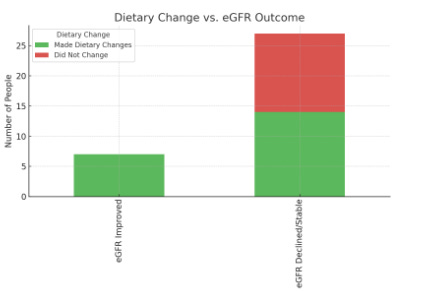
All individuals who experienced significant eGFR improvement reported making intentional dietary changes, including reductions in red meat, salt, and total protein, and increases in hydration and plant-based intake.
In contrast, nearly half of those who saw their eGFR decline or remain unchanged did not modify their diet — highlighting the vital role of proactive, guided nutritional adaptation in kidney health.
2. Plant-Based Patterns Dominate Among the Improved
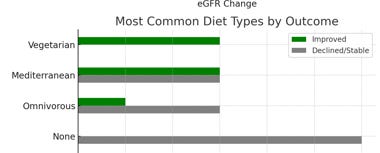
The vegetarian and Mediterranean diets emerged as the most common patterns among individuals whose kidney function improved. These diets emphasize low sodium, high fiber, and anti-inflammatory foods, which are aligned with renal protection strategies.
Participants who declined or stayed stable were more likely to report no structured dietary approach.
3. Exercise: Helpful, But Not Sufficient Alone
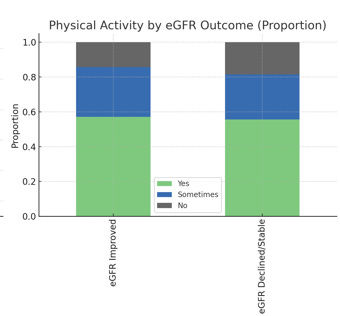
Physical activity was widely reported across both groups, regardless of eGFR trajectory. This suggests that while movement is a foundational aspect of chronic disease management, exercise alone is unlikely to drive improvement without concurrent dietary shifts.
Rethinking Comorbidities as Determinants
The improved group was not free of medical complications — in fact, many had multiple comorbidities including HBP, diabetes, and high cholesterol. Yet these individuals saw positive changes in eGFR, reinforcing the notion that comorbidities are not deterministic. When patients engage in effective behavior change, they can override some of the biological risk factors traditionally seen as barriers to improvement.
Conclusion
These findings show that MetaSano is on the right path. By focusing less on diagnostic labels and more on nutritional access, behavioral coaching, and tailored support systems, the MetaSano approach is proving effective in activating patients as agents of their own outcomes.
With care,
Ewerton Lopes - Living with CKD since 2016
CEO of MetaSano
Integrative Nutrition Specialist
Kidney Health Coach
Member of the Quebec Nephrology Society
Gerontologist
Author of the book My Dog, My Healer: My path to overcoming chronic kidney disease
Not using MetaSano yet?
MetaSano is an app designed for stage 3 and 4 kidney patients, offering personalized guidance on which foods to eat based on lab results, comorbidities, medications, allergies, and individual health profiles.
👉 Download MetaSano now
Our newsletter comes out every Sunday and Wednesday, bringing you insights, tools, and personal experiences to help you live better with CKD.