
Decoding "Kidney-Friendly" Food Lists: Why The Viral Chart Might Be Missing the Mark
Rethinking the "Avoid" List: The Truth About Quinoa, Nutrient-Dense Foods, and Personalized Kidney Health.
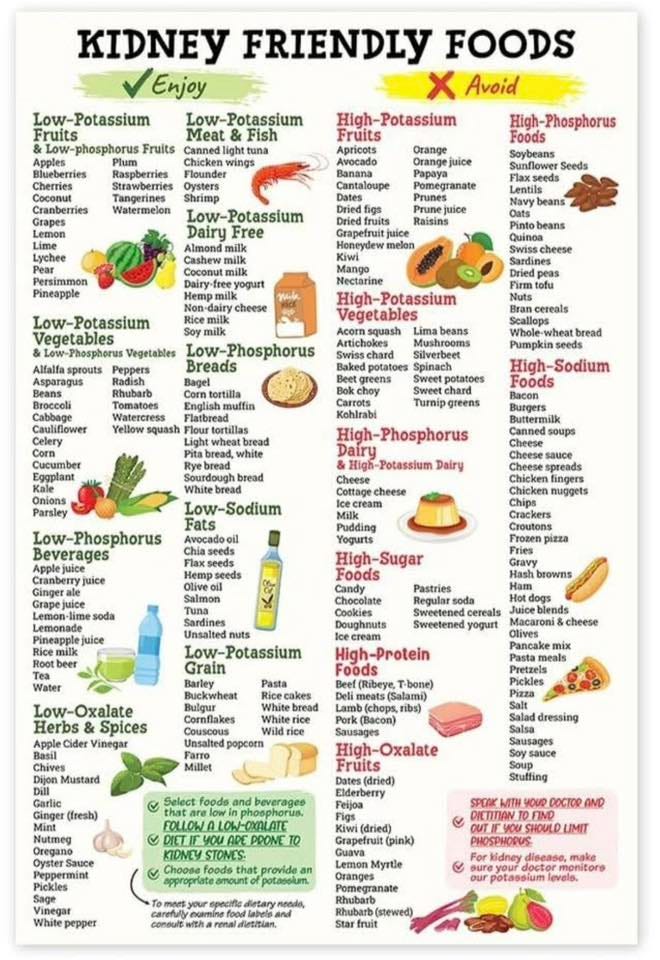
You've likely seen them: colorful charts categorizing foods as "good" or "bad" for kidney health. One such chart (like the one pictured below) aims to guide individuals by highlighting foods to "Enjoy" versus "Avoid," often based on their potassium or phosphorus content.
While well-intentioned, these generalized lists can sometimes paint an incomplete, or even misleading, picture. Let's take a closer look at why some "avoid" foods might actually be beneficial, and how a more personalized approach is key.
The Quinoa Quandary: "High Phosphorus" Doesn't Tell the Whole Story
The chart flags quinoa as a "High-Phosphorus Food" to avoid. This is a prime example of where context is king.
Yes, a cup of cooked quinoa contains phosphorus (around 22% of the Daily Value). However, quinoa is a nutritional superstar! It's a fantastic source of plant-based protein (around 8 grams per cooked cup), providing all nine essential amino acids, making it a "nearly complete" protein. It's packed with fiber (over 5 grams per cup), which is crucial for digestive health and can help with satiety. It also offers valuable folate, magnesium, iron, and potent antioxidants like quercetin and kaempferol, known for their anti-inflammatory properties.
Crucially, not everyone with kidney concerns needs to strictly limit phosphorus, especially from plant sources. Here's why:
Bioavailability: Phosphorus from plant-based foods (like quinoa, beans, and nuts) is typically bound to phytates, making it less bioavailable – meaning your body doesn't absorb all of it (often only 20-50%). This is different from the highly absorbable phosphorus found in animal proteins and, especially, phosphate additives in processed foods.
Individual Needs: The need to restrict phosphorus is highly dependent on the stage of kidney disease and an individual's bloodwork. Many people in earlier stages of CKD, or those whose phosphorus levels are well-managed, may not need to avoid nutritious, whole-food sources of phosphorus like quinoa. Blanket restrictions can lead to an unnecessarily limited diet, potentially missing out on beneficial nutrients.
Preparation Matters: Rinsing, soaking, or sprouting quinoa can further reduce its phytic acid content, potentially improving the absorption of other minerals and slightly mitigating phosphorus concerns for those who are sensitive.
For many, the benefits of including a moderate amount of quinoa in their diet far outweigh the concerns about its phosphorus content, especially when considering its overall nutritional profile.
What About Soybeans, Lentils, and Oats?
The chart also lists soybeans, lentils, and oats under "High-Phosphorus Foods" to avoid. Similar to quinoa, these are nutritional powerhouses:
Lentils and Soybeans (e.g., edamame, tofu): Excellent sources of plant-based protein, fiber, iron, and folate. They play a significant role in heart-healthy and diabetes-friendly diets. Again, the phosphorus they contain is plant-based and less bioavailable.
Oats: Renowned for their soluble fiber (beta-glucan), which can help lower cholesterol and stabilize blood sugar. They are a fantastic whole grain.
Excluding these foods entirely could mean missing out on important nutrients and fiber that contribute to overall well-being, including aspects of health that are supportive for individuals with kidney concerns, like blood pressure and blood sugar management.
The Potassium Puzzle: It's Essential, Not Evil!
Many wonderfully healthy fruits and vegetables, like avocados, bananas, oranges, potatoes, spinach, and tomatoes, are often listed as "High-Potassium" foods to avoid on kidney diet charts. This can be particularly alarming because these foods are packed with vitamins, minerals, fiber, and antioxidants that are crucial for overall health.
Why do we need potassium? Potassium is an essential mineral and electrolyte that plays a vital role in:
Maintaining normal fluid balance within cells.
Nerve function and signaling.
Muscle contractions, including the heart muscle.
Helping to regulate blood pressure (often by blunting the effects of sodium).
When is restriction necessary? For individuals with advanced kidney disease (typically Stages 4-5 or those on dialysis), the kidneys may lose their ability to effectively excrete excess potassium, leading to a dangerous condition called hyperkalemia (high blood potassium). In these specific cases, dietary potassium restriction is indeed necessary under the guidance of a doctor and renal dietitian.
The Danger of Over-Restriction for Others: However, for many people, including those with early-stage CKD or those without hyperkalemia, drastically cutting out these nutrient-dense foods can be counterproductive. As you astutely pointed out, if potassium intake needs to be managed, it's often wiser to:
Focus on Portion Control: Enjoying smaller amounts of these healthy foods.
Consider Preparation Methods: Boiling some vegetables (like potatoes or spinach) can leach out a significant portion of their potassium content.
Prioritize: It's far better to get your potassium from whole, unprocessed foods than from less healthy sources or to become deficient. If choices need to be made, it would be more beneficial to limit processed foods that might also be high in potassium (and often sodium and phosphorus additives) but offer little other nutritional value, rather than eliminating beneficial fruits and vegetables.
My Weekend Food Log: Challenging Diet Myths with Real Data
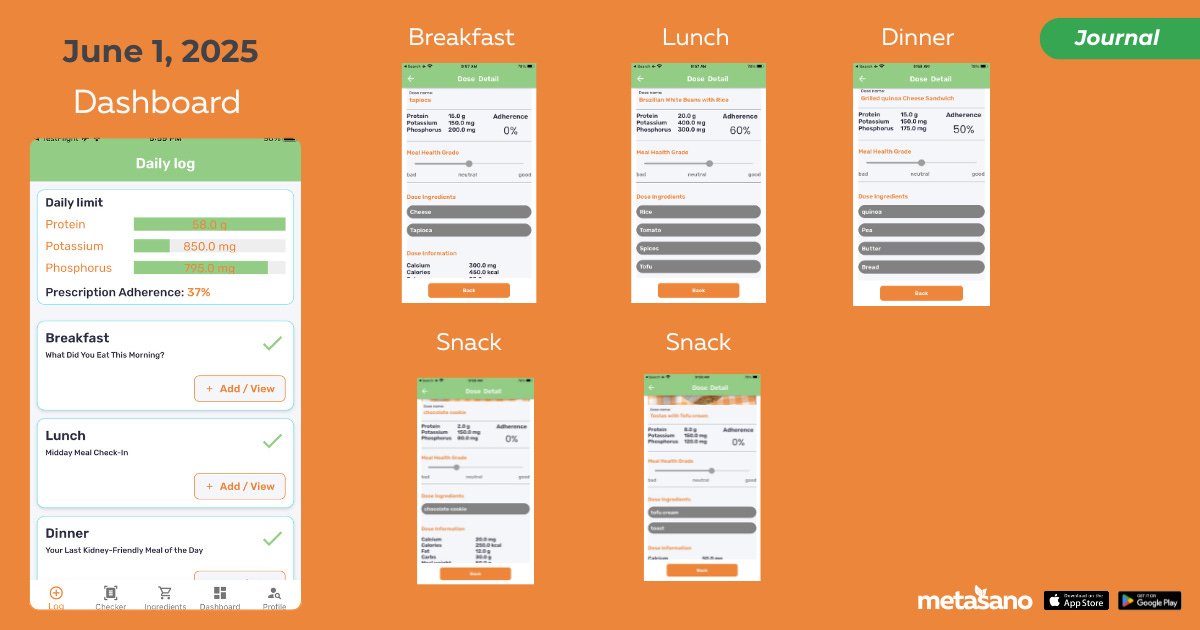
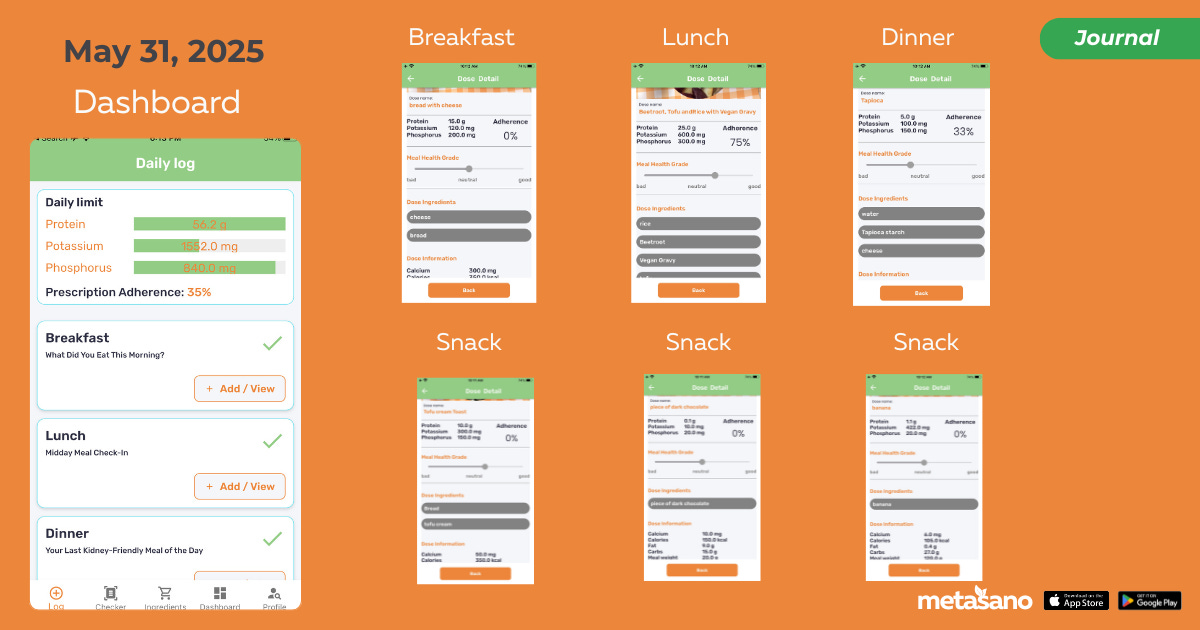
To bring this discussion to life, I want to share my personal data from this past weekend. I logged my food intake using an app called MetaSano where I am one of the co-founders, and the results were quite revealing, especially when contrasted with generalized "kidney-friendly" food charts.
For context, I have CKD Stage 3A and currently don't have specific restrictions on my phosphorus or potassium intake. Over the weekend, my meals included foods often flagged on generic lists: quinoa, peas, tofu, tofu cream, and even some cheese.
Here’s what you will discovered:
Proteins: Despite enjoying these protein-rich plant-based options like quinoa and tofu, my total protein intake remained comfortably within my recommended daily numbers. This shows that incorporating these nutritious foods doesn't automatically mean overdoing it on protein.
The Phosphorus Picture: This was particularly interesting. Even with quinoa, chocolate (another item often watched for phosphorus), and a good variety of vegetables in my diet, my logged phosphorus intake was actually a little bit lower than the general daily recommendation. If I'd been strictly avoiding these based on a chart, I might have undershot this mineral.
Potassium – The Big Surprise: This was the most striking finding. I ate a banana, a fruit famously high in potassium and often on "limit" lists. I also ate tomatos. Yet, when I looked at my total for the day, my potassium intake was surprisingly too low – significantly below the recommended daily amount.
This personal experiment really underscores the central theme we've been discussing. If you don't log your meals and understand your actual intake, and you're solely following a general diet chart like the one I pointed out earlier, you might be consuming far too few essential nutrients. This could potentially be harming your overall health more than helping it.
Source: MetaSano app
Source: MetaSano app
The Bottom Line: Personalization is Paramount
Kidney disease is complex, and dietary needs vary greatly from person to person. Factors like the stage of CKD, co-existing conditions (like diabetes or heart disease), individual blood test results, medications, and overall health status all play a role in determining the right dietary approach.